Cabinet Stain Colors For Colorado Springs Homes
Explore natural wood tones from light and understated to warm, rich, and dramatic. Case Cabinets helps you compare stain colors, wood species, and cabinet door styles as part of a coordinated kitchen or cabinetry design.
Stain Color And Wood Species Work Together
A cabinet stain adds color while allowing the wood grain and natural variation to remain visible. The final appearance depends on both the stain and the wood beneath it, so the same general color can look different on maple, cherry, hickory, alder, white oak, or walnut.
Troy Case helps homeowners compare physical samples in the context of the entire room. Cabinet color should work with the flooring, countertops, backsplash, lighting, and adjoining spaces rather than being selected by itself.
- Compare stain colors on the actual wood species
- Review natural grain and color variation
- Consider the room’s natural and artificial lighting
- Coordinate cabinets with surrounding materials
- Confirm current cabinet-line options before ordering
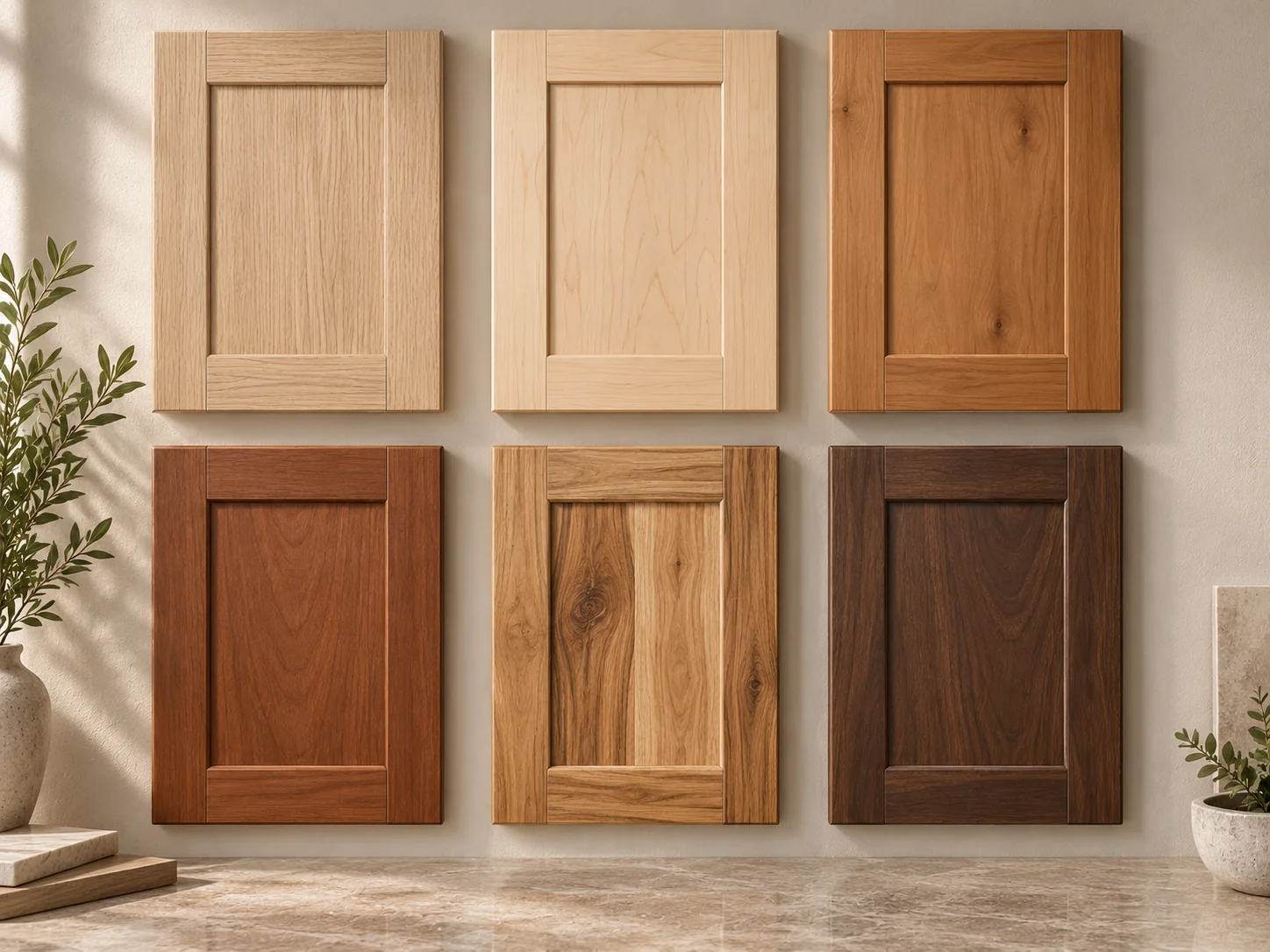
Popular Cabinet Stain Color Directions
Exact stain names and availability vary between cabinet lines. These broad color directions provide a practical starting point for narrowing the look you want before reviewing current physical samples.
Natural And Clear Finishes
Natural-looking finishes keep the wood close to its original color and allow grain, knots, and tonal variation to remain prominent.
Light Blonde Stains
Light stains create an open, relaxed appearance and can highlight the texture of white oak, maple, and other lighter woods.
Honey And Golden Tones
Warm golden stains bring out the natural warmth of wood and can complement cream, beige, bronze, and earthy materials.
Medium Brown Stains
Medium brown tones provide visible warmth and contrast without making the cabinetry feel as visually heavy as a very dark finish.
Rich Reddish-Brown Stains
Cherry and auburn directions create a traditional, warm appearance, although natural undertones differ by wood species.
Dark Brown Stains
Deep espresso and walnut-inspired tones add contrast and formality, especially when balanced with adequate light and lighter surrounding surfaces.
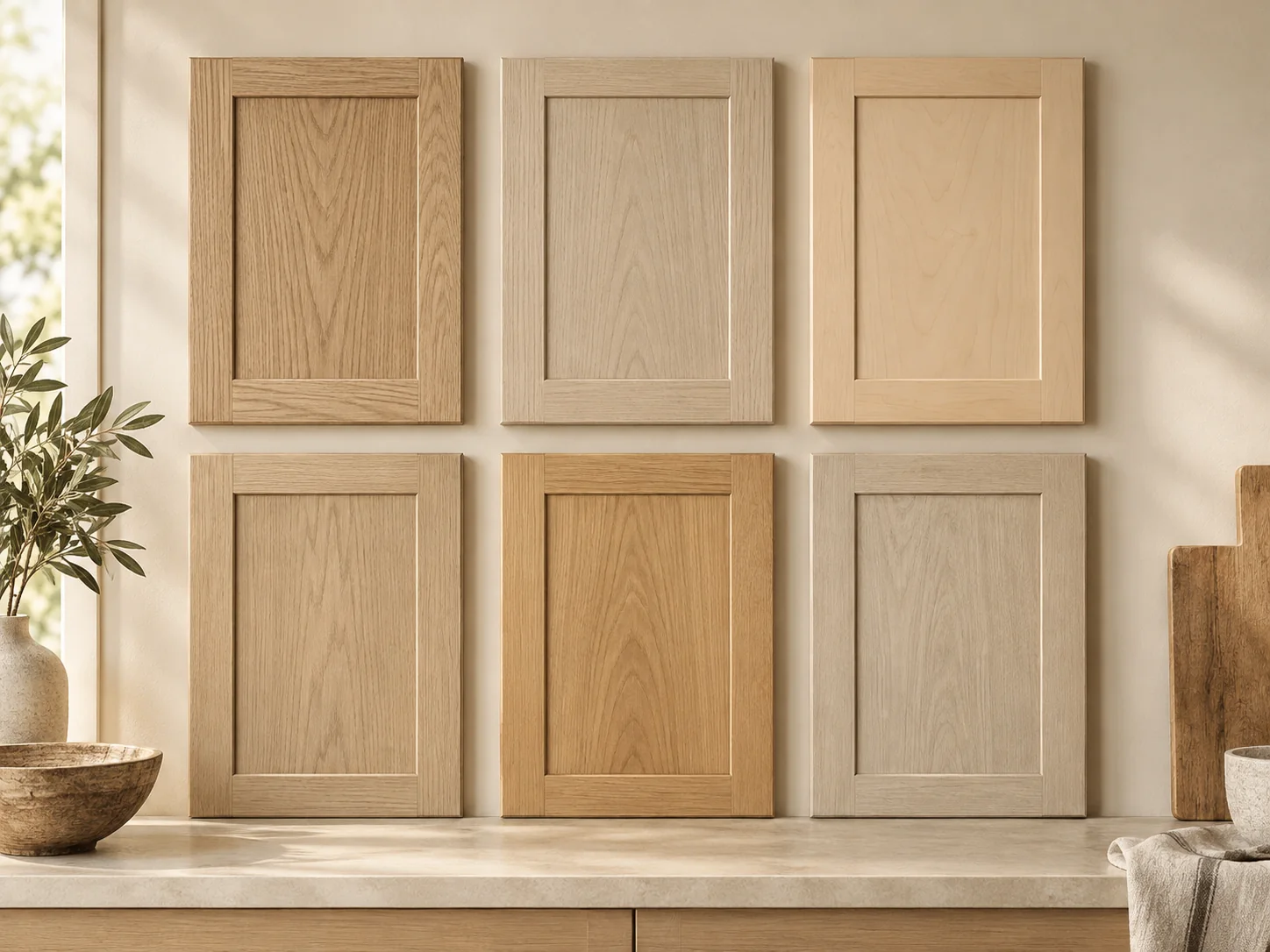
Keep The Kitchen Bright While Showing Natural Grain
Light stains can make natural wood cabinetry feel clean and current without covering the character of the material. They work especially well when the design calls for warmth, visible grain, and an airy overall appearance.
White oak is frequently considered for this direction because its grain can remain visible beneath pale and natural finishes. Maple can provide a smoother and more uniform appearance, depending on the selected finish and available cabinet line.
- Works well with bright and open kitchen designs
- Allows natural grain to remain visible
- Pairs with many light and dark countertop choices
- Can feel modern, transitional, or casually traditional
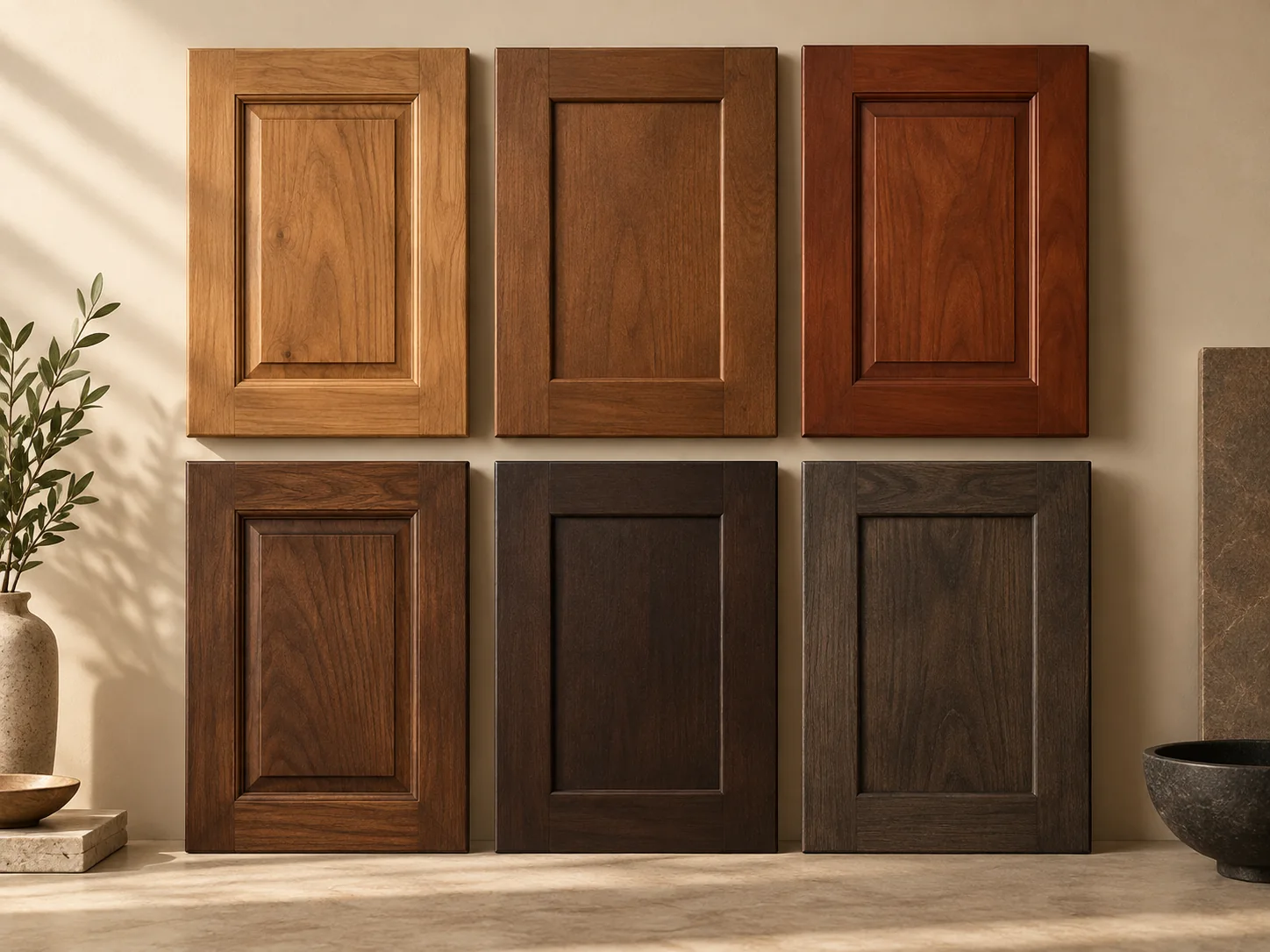
Add Warmth, Contrast, And Visual Depth
Medium stains can bring warmth to a room while retaining clear grain definition. Dark stains create stronger contrast and can give cabinetry a more substantial, furniture-like presence.
The size and lighting of the room matter. A deep finish may look rich on a sample but feel heavier across a full wall of cabinetry. Balancing darker cabinets with countertops, flooring, wall color, and lighting helps the finished kitchen remain inviting.
- Medium stains offer warmth without extreme contrast
- Dark stains can create a formal or dramatic appearance
- Wood grain may appear more or less prominent by species
- Lighter surrounding surfaces can balance darker cabinetry
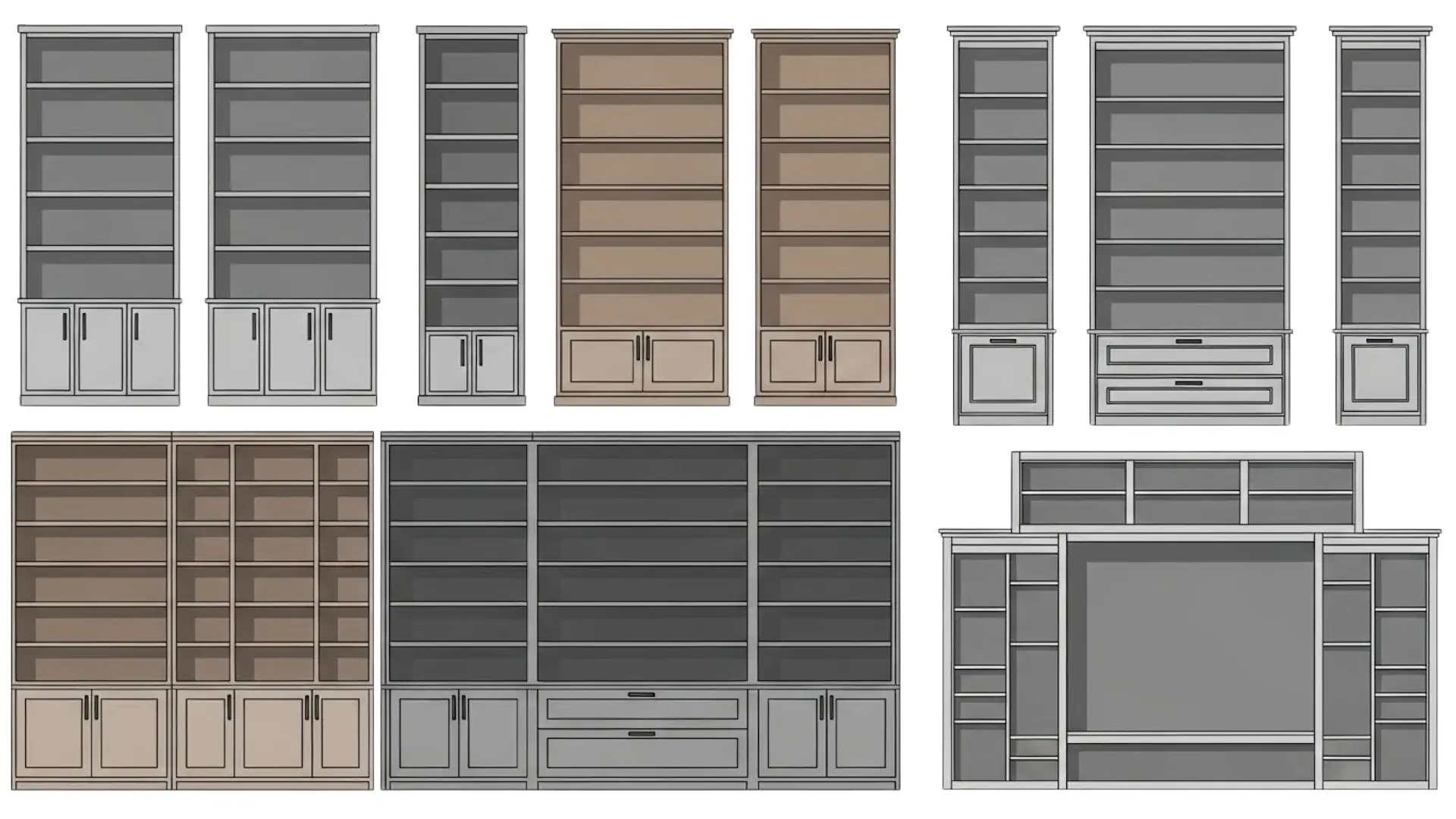
Evaluate Stain Samples With The Rest Of The Room
Computer screens and photographs cannot reproduce every undertone or variation in real wood. Physical samples provide a better basis for comparing cabinet stains with countertop, backsplash, flooring, and paint selections.
During the design process, Case Cabinets helps you consider how materials relate under the lighting conditions in your home. This reduces surprises and supports a more cohesive finished space.
- View physical samples whenever possible
- Compare selections in natural and evening light
- Place wood beside countertop and flooring samples
- Account for normal variation in natural materials
- Approve the complete combination before ordering
How Case Cabinets Helps You Choose A Stain
1. Define The Design Direction
Discuss the room, desired atmosphere, remodeling scope, cabinet style, and working budget.
2. Select A Wood Species
Compare grain patterns, natural color, variation, and availability for the cabinet design.
3. Compare Stain Families
Narrow the direction to natural, light, warm medium, reddish-brown, or dark tones.
4. Coordinate Materials
Review the cabinet finish with countertops, flooring, backsplash, lighting, and adjoining rooms.
5. Confirm The Selection
Verify the chosen wood, door style, and stain combination is currently available.
6. Approve Before Ordering
Review the final cabinet plan and finish selection before the order is placed.
Frequently Asked Questions About Cabinet Stain Colors
Will a cabinet stain look exactly like the website photo?
No. Screen settings, photography, lighting, wood species, and natural grain variation can all change how a color appears. Physical samples should be reviewed before making a final selection.
Why does the same stain look different on different woods?
Each wood species has its own natural color, grain, density, and absorption characteristics. Those differences affect the final tone and appearance of the stain.
Are light or dark cabinet stains better for a small kitchen?
Light finishes often help a smaller room feel more open, but layout, lighting, countertops, and the amount of cabinetry also affect the result. A well-balanced darker finish can still work in some smaller kitchens.
Can stained cabinets be used in a modern kitchen?
Yes. Natural wood works in modern kitchens when paired with a simple cabinet door style, clean lines, and coordinated materials.
Does natural wood have color and grain variation?
Yes. Variation is an expected characteristic of real wood. The amount and type of variation depend on the species, individual boards, stain, and cabinet construction.
Can Case Cabinets help coordinate the entire kitchen?
Yes. Case Cabinets can help coordinate cabinetry with layout, storage, countertops, flooring, lighting, and the broader kitchen remodeling project.
Ready To Find The Right Wood Finish?
Schedule a consultation with Troy Case to compare cabinet stain colors, wood species, door styles, and coordinated design options for your Colorado Springs home.